Street Prophet, Servant of GOD, Patriot, Renaissance Activist, and Voice of and to America’s Golden Age
Family, Memory, and Inheritance
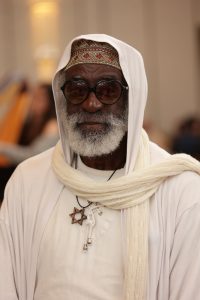
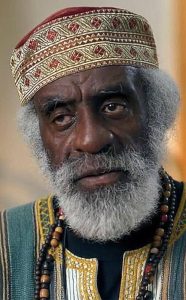
Born in 1951 during the Korean War, and entering his 75th year in 2025, Ted Hayes is the son of a World War II United States Army combat veteran and the child of a strong and loving family of five boys and one girl, with Ted the next-to-youngest. Having outlived his sister, his mother and father, and two older brothers, he stands now as a bearer not only of memory, but of inheritance, duty, and witness. From that household came a distinctly American formation marked by discipline, affection, endurance, patriotism, hardship, and moral responsibility. Ted Hayes is not merely an individual story. He is also a carrier of family legacy and national memory.
Defender of the Weak
From his earliest years, there were signs that his path would not be ordinary. He defended weaker students against bullies, not as performance, but as instinct. That reflex would become one of the deepest continuities of his life. What began in schoolyards later reappeared in the streets, in civic struggle, and in his long identification with the homeless, the poor, the neglected, and the cast aside. Long before he became publicly known, the central impulse was already present: to stand with those whom others overlooked, dismissed, or trampled.
Sport, Discipline, and Manhood
Ted Hayes was shaped not only by conviction but by action, structure, and physical excellence. In high school he distinguished himself in athletics, especially in track and field, where he became a county champion and state runner-up, while also serving as team captain. His development through the Boy Scouts of America, including serious participation under respected leadership, added further layers of preparedness, courage, honor, initiative, and responsibility. These experiences helped build the steadiness, endurance, and self-command that later marked his leadership and public witness. That athletic legacy continues into the next generation, as his daughter now serves as a college track and field head coach, extending a family inheritance of discipline, excellence, and formation.
Forged in the Fires of the Sixties and Seventies
As a young man, Ted Hayes moved through some of the great moral and cultural storms of modern American life. He was shaped by the late Civil Rights era and the atmosphere of Black Power, while also bearing the imprint of the late-1960s peacenik and anti-war spirit. In the early and mid-1970s, he emerged as a spokesman and leader among the Jesus People, joining spiritual witness to social concern. These were not disconnected episodes, but converging streams. In them one sees a life formed by race, nation, protest, peace, faith, and upheaval all at once — and drawn, through all of it, toward justice, mercy, meaning, and witness.
The Renaissance Social Activist
Ted Hayes may rightly be called a Renaissance social activist, for his life resists confinement to a single issue, constituency, profession, or ideological lane. He has been an activist, actor, singer-songwriter, author, prolific essayist, mentor, organizer, movement-builder, and symbolic public witness. The street burden for the homeless, concern for over-challenged youth, the spiritual seriousness of Judaic and biblical foundations, love of sport, the discipline of cricket, the energy of roller skating, the symbolism of American patriotism, and the labor of writing all belong, in him, to one vocation. In Ted Hayes, activism is not merely agitation. It is instruction, uplift, civic performance, moral theater, mentorship, and legacy — the labor of shaping souls as well as systems.
GOD at the Center
At the center of Ted Hayes’ life and persona stands not Ted Hayes himself, but GOD — the Most High — under whose authority he understands both his own calling and the moral destiny of this Christian nation. Whatever public roles, burdens, or recognitions have marked his life are, in his own understanding, subordinate to that higher reality. His deepest claim is not that he is self-made, but that he is governed; not that he is beyond error, but that he is accountable.
If this is indeed a Christian nation under GOD, then those who invoke His Name and present themselves as ambassadors of His earthly Kingdom must also accept responsibility, accountability, and even culpability for failing to uphold His justice, mercy, truth, and covenant order. In this light, Ted Hayes’ witness is not merely exhortation toward others; it is also a call to sober self-examination among those who speak loudly in the language of faith, nation, and righteousness.
Under Abraham’s Blessing
No account of Ted Hayes is complete without naming the deepest center of his admiration and allegiance: Yeshua/Jesus HaMashiach Christ, the ancient-living Jew of Israel, whom he regards as the greatest and most consequential Person and Persona in history. From this center, much else in his life becomes intelligible. His love, protection, and blessing toward Jews, Hebrew Israelites, Arabs, and all who in some sense stand within the Abrahamic inheritance arise not first from politics, but from covenantal conviction — especially Genesis 12:1–3. He carries gratitude toward the Jewish people who faithfully preserved the Torah and Tanakh through the centuries, so that even the nations might look therein, meet the living GOD, and come into friendship and service under Him. His visits to Eretz Israel deepened this bond on both personal and historical levels.
Justice, Mercy, and the Least of These
In that same scriptural light, and especially through Matthew 25 and the Messiah’s identification with “the least of these,” Ted Hayes came to understand more fully the matters of judgment, justice, mercy, and obligation toward the poor, the needy, the vulnerable, and the homeless. Thus, his regard for Israel, his blessing toward Abraham’s children, and his service among the broken are not separate concerns, but parts of one sacred obedience. In his own understanding, the care of the poor and the defense of dignity are not optional sentiments, but a Kingdom duty.
Prophetic Frameworks and Moral Architecture
Beyond activism alone, Ted Hayes has sought to give language and structure to the crises of his time. Through ideas and frameworks such as Generational Responsibility, Sky-Walking and Earth-Walking, Elijah’s Mantle, and the We the People Ultimate Court of Public Opinion, he has worked to move public discourse beyond reaction and toward reckoning, healing, duty, repentance, and purpose. These are not mere titles. They are interpretive frameworks through which he addresses memory, inheritance, civic conscience, social fracture, spiritual blindness, and the unfinished obligations of nation and soul.
Generational Responsibility and the Burden of Memory
A central thread in Ted Hayes’ work is the conviction that history does not simply disappear, and that one generation’s sins, silences, sacrifices, and unfinished duties inevitably visit the next. This moral inheritance he has described as Generational Responsibility — the duty to remember rightly, repair honestly, and carry forward what conscience requires. In this, he stands not merely as a protest figure, but as a guardian of burden and continuity, insisting that true healing requires memory, and that memory without responsibility becomes sentiment rather than justice.
Sky-Walking and Earth-Walking
Ted Hayes’ thought carries a distinctive tension between vision and embodiment, transcendence and duty — a tension captured in his language of Sky-Walking and Earth-Walking. By this he points to the need to hold together spiritual imagination, divine purpose, and prophetic aspiration with grounded labor among the poor, the wounded, the citizen, and the neighbor. He is neither only a dreamer of higher things nor only a laborer in low places. He is one who insists that heavenward vision must learn to walk upon the earth.
Elijah’s Mantle and Prophetic Burden
In themes associated with Elijah’s Mantle, one sees Ted Hayes’ understanding of public witness as burden, warning, repentance, confrontation, and moral appeal. This is not prophecy as spectacle, but prophecy as obligation: to speak when silence is easier, to call a people to account, and to summon conscience before judgment overtakes comfort. He seeks not merely to describe decay, but to call forth responsibility, repentance, and return.
Birthright Citizenship, the Amicus Brief, and the Great Present Struggle
At this present hour, Ted Hayes stands within what may prove to be the greatest political, constitutional, and social struggle of his life: the battle surrounding Birthright Citizenship, the witness of his Amicus Brief, and the period of Supreme Court deliberation and decision now pressing upon the nation. In this matter, he has not stood at a distance. He has inserted himself directly into one of the most important debates in America — one reaching back to the birth of the nation, its founding contradictions, its constitutional development, its Civil War reckonings, and its unfinished struggle over who truly belongs, by what authority, and under what obligations of law, history, and justice.
In Ted Hayes’ understanding, this is no mere technical dispute. It is a living reckoning touching the fate of his people and, through that fate, the moral condition of this Christian nation under GOD itself. Here converge the deepest questions of federal citizenship, historical truth, constitutional meaning, national repentance, and public obligation. It is not merely a case. It is a reckoning.
And because it is a reckoning, it is also a summons. The reader is not left outside as spectator only. In this present struggle, the life and work of Ted Hayes become immediately relevant, inviting others to enter a defining arena of meaning, duty, courage, and public responsibility. The Birthright Citizenship struggle is thus more than Ted Hayes’ present labor. It is a doorway through which others may discover, in real time, that the search for the meaning of life is not always found in private comfort, but often in public trial, historical truth, and moral involvement.
A Witness Rare in the American Story
In this present controversy, Ted Hayes appears in a role rare in the American story. Like few others in the nation, he has stepped into the heart of a constitutional struggle reaching from the Republic’s beginnings through slavery, war, emancipation, Reconstruction, and the unresolved meaning of national belonging itself. He has not merely commented upon that struggle. He has entered it. That singularity matters. It means that Ted Hayes is not simply a legacy figure reflecting on old battles, but a living combatant in one of the defining civic and spiritual contests of the age.
Servant of the Homeless and the Forgotten
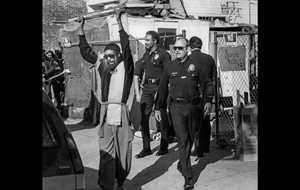
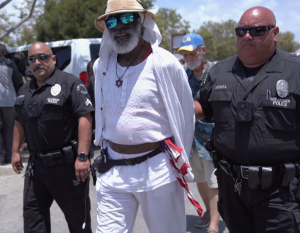
Among the many dimensions of Ted Hayes’ public life, one of the most defining has been his service among the homeless, the poor, and the publicly forgotten. Through Justiceville and Dome Village, he became one of the most visible and enduring advocates for those cast aside by mainstream systems and polite society. His work on the streets of Los Angeles and beyond gave human form to mercy, protest, invention, and public conscience. Over time, this witness drew broad local, national, and even international attention. Much of Los Angeles media, together with national outlets, came to recognize him as among America’s foremost homelessness and Civil Rights activists.
Patriot and Public Witness
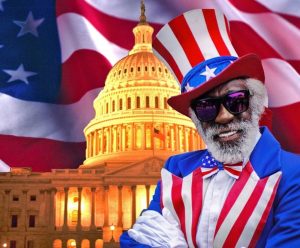
Ted Hayes is not only a critic of the nation, but one of its symbolic defenders. In the public figures of Mr. Patriot and Mr. Citizen Patriot, he has carried a form of civic witness that joins conscience with country, protest with patriotism, and memory with warning. He has appeared not merely as a man in costume, but as a living sign standing in the background of America’s unfinished promises, constitutional reckonings, and search for a worthier future. That symbolic role received added public notice when he appeared as Mr. Citizen Patriot on the front page of the Wall Street Journal on July 5, 2024, underscoring his place in the civic imagination in the years leading toward the nation’s 250th anniversary.
Citizen, Candidate, and Democratic Participant
Ted Hayes has not confined his civic vision to commentary alone. Shaped first by the Democratic Party tradition common among many Black Americans, later spending years in the Republican Party, and now standing as an Independent, he has moved through the nation’s political currents without becoming captive to any one of them. He ran for Mayor of Los Angeles in 1993, for City Council in 2000, and for Congress in 2008 against Congresswoman Maxine Waters. He also worked polling places and engaged democracy at the practical level. These efforts reveal a man unwilling merely to denounce the system from outside. He has also stepped toward it, tested it, and challenged it.
Cricket, Civility, and Peace
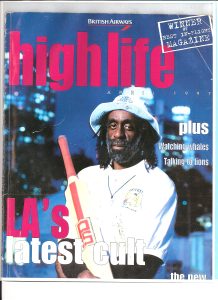
While Justiceville and Dome Village made Ted Hayes known for homelessness advocacy and street-level civic leadership, another arena helped carry him onto the international stage: cricket. He has played it, coached it, promoted it, and is presently rebuilding a new team, while using its etiquette and discipline as a school of civility, self-command, and respectful conduct. Through the world’s second-largest fan-based sport, he entered a broader field in which sport became more than sport. In his own understanding and testimony, cricket became a form of “diplomanch,” contributing to the moral atmosphere surrounding the 1998 Good Friday Northern Ireland Peace Accords, whose peace and civility have now endured for 27 years. In Ted Hayes’ hands, cricket became instruction, bridge-building, and practical peacemaking.
Performance, Presence, and Public Imagination
Ted Hayes’ public life also encompasses performance, image, and dramatic communication. In school, he won acting honors and was recognized by peers as one of the most likely to succeed. Later, he acted in plays, including portrayals of Nat Turner, and appeared on television, including with Marla Gibbs in 227, playing a character named Ted Hayes. He has long understood that symbols matter, presence matters, and that public life is not only argued but embodied. His persona is neither artificial nor accidental. It is a disciplined extension of his witness.
A Persona That Comes Rarely
In the historical context of Los Angeles and of the nation, the uniqueness of Ted Hayes’ persona must be plainly acknowledged. He is not merely memorable. He is singular. He belongs to that uncommon order of public figure whose combination of symbolism, street credibility, moral witness, civic imagination, artistic instinct, athletic bearing, and lived sacrifice comes around but rarely in a lifetime. Such figures are not manufactured by consultants, nor assembled by institutions. They arise through history, contradiction, pressure, burden, and calling.
Seen, Searched, and Remembered
Ted Hayes’ presence has not remained hidden or merely local. He has been noted across the contemporary public square — in Google, YouTube, Instagram, Facebook, LinkedIn, TikTok, local Los Angeles coverage, and national media. His image, work, and witness have circulated through news stories, interviews, public appearances, and social platforms, creating a trace that reaches well beyond a single neighborhood or movement. This broad visibility does not create the substance of his life, but it does testify to the public legibility of his witness and its difficulty to ignore.
Voice to the Languishing Soul
Yet for all that may be said of the range of his life, perhaps what matters most is not merely what Ted Hayes has done, but what his life and writings stir in others. He speaks to people across every class and condition — from the richest and most powerful to the poorest, weakest, and homeless — because beneath outward differences there often lies the same inward hunger. He addresses those who are languishing in their souls and in their purpose. He speaks to the ache for meaning, the thirst for justice, the desire for healing, the hope of restitution, and the longing to belong to something greater than oneself.
OG Wisdom for a New Generation
For younger generations, especially, there is something singular here. In Ted Hayes, they do not merely meet an elder. They meet a bearer of living memory — a man shaped by the late-20th-century fires that helped shape the age they now inhabit. They meet, in real time, a vessel of OG wisdom: not nostalgia, not self-mythology, but hard-earned insight carried through protest, prayer, art, sport, public service, sorrow, faith, and perseverance. He offers younger seekers not dead history, but walking legacy; not museum memory, but living counsel.
Living Legend in Real Time
For this reason, there is about Ted Hayes both a certain mystery and openness. He is public, yet not fully exhaustible. Open in persona, yet deeper than first appearance. Symbolic, yet unmistakably human. Familiar in image, yet still surprising in range. He gives people the rare experience of encountering, within their own lifetime, not merely a personality, but a living legend — one who still walks among the people, still writes, still speaks, still teaches, still provokes, still gathers, still builds, and still leaves the hearer wanting more.
Voice of and to America’s Golden Age
To encounter Ted Hayes, then, is not merely to observe a life. It is to be summoned by one. His witness calls people toward truth, justice, mercy, courage, citizenship, reconciliation, and purpose. He stands not only as a voice of America’s Golden Age, but as a voice to it — describing its possibility while also calling it forth. In that sense, his life and work are both testimony and invitation. They remind a weary people that citizenship may still be sacred, public mercy may still be noble, patriotism need not be emptied of conscience, and a nation still in travail may yet be called toward a better hour under the Most High GOD.