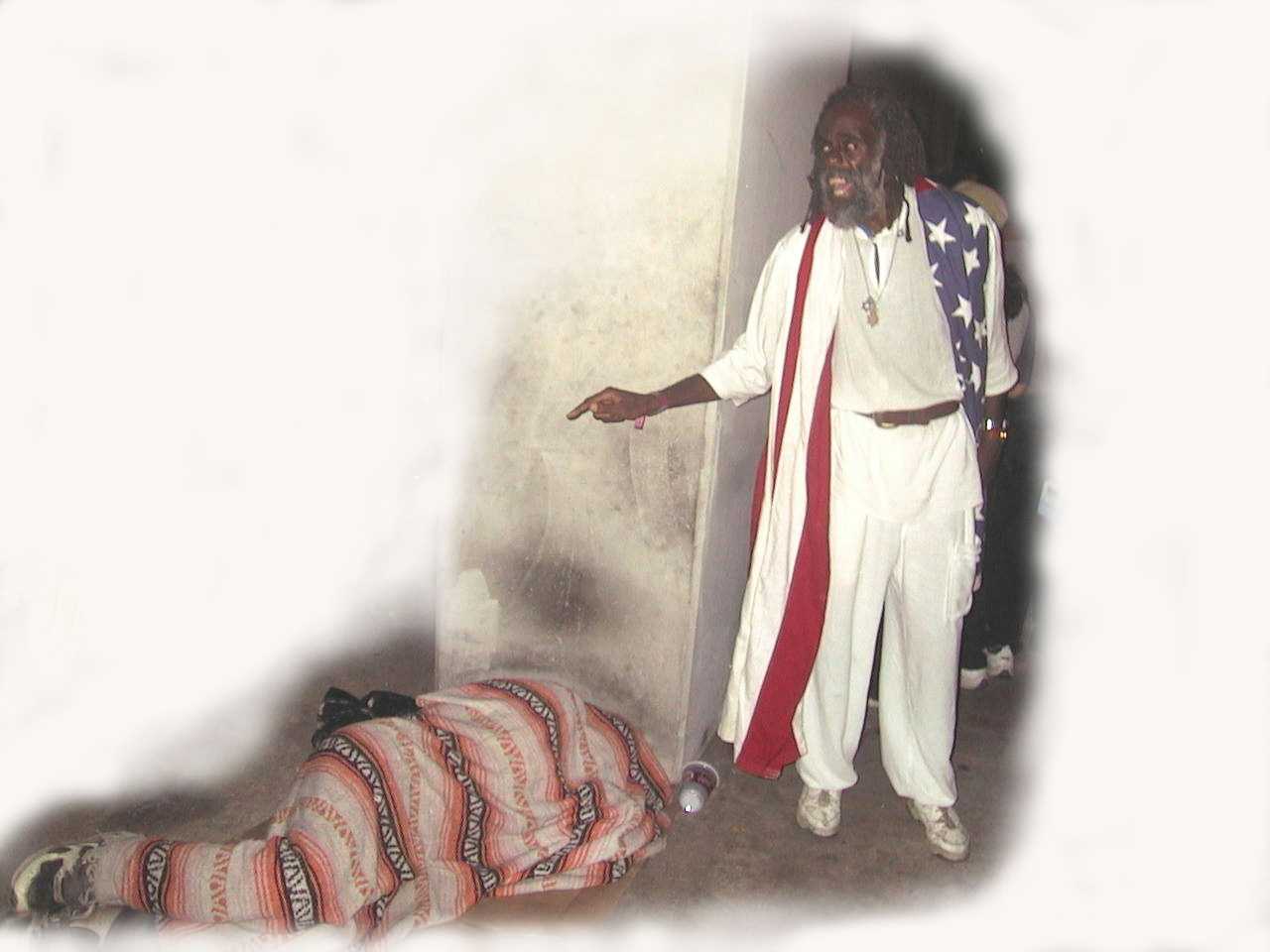
Ted Hayes, Original “god-father” of Wall
Street Occupation of
Los Angeles
City Hall History of Occupation
Includes Tents Outside and Sleeping
Bags inside Chambers
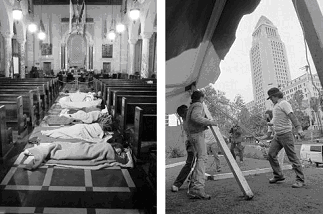
Homeless people sleep on
the floor of City Hall's Council Chambers on
Right: Workers erect a large tent next door to
City Hall in December of 1984 for the first of two tent cities on the
site
DOWNTOWN
LOS ANGELES —
The protesters of Occupy Los Angeles have been sleeping on the lawns
outside City Hall for three weeks now, but so far the group's journeys
into the building have mostly been confined to trips to give public
comment at City Council meetings.
That wasn't the case in January of 1987, when for
just a few days the floor of the Council chambers was opened up as a
temporary homeless shelter.
The move, prompted by a cold
front that dropped Downtown temperatures near freezing, was part of a
multi-year advocacy effort that included homeless individuals sleeping
in a tent city on the state building footprint across the street from
City Hall, in the tunnels of the County's Civic Center complex and
eventually in an Arts District campground that came to be known as the
"Dust Bowl Hilton."
The tent
city next door to City Hall came
first, set up in December of 1984 by a coalition of agencies that called
itself the Homeless Organizing Team. 250 people made a temporary home in
and around a pair of large tents, set up both to provide a few weeks of
shelter and to dramatize the plight of the homeless. Just as with
today's protests, the action was also designed to get media attention.
When the site was shut down in
early January, some former residents followed organizer
Ted Hayes—who would go on to
be a central figure in Los Angeles homeless advocacy—to a site at 6th
and Gladys. There they set up a shantytown dubbed "Justiceville," but it
was shut down in May of 1985 by officials over health and safety
concerns.
Hayes and his Justiceville
followers staged marches
throughout Downtown and the city, and continued the struggle for a
permanent site.
At the end of 1986,
Hayes
organized "Tent City II" across from
City Hall, using a 5,000-square-foot circus tent that could sleep 200.
Again, though, the site was only good for a few days.
City Hall's doors were opened on
None of these efforts, though, had the scale of the
"Dust Bowl Hilton," a 12-acre campground on the site of Metro's
present-day subway rail yard in the Arts District. 2,600 people passed
through in the three months that the site was open.
The urban campground had dust in
the air, too little drainage and leaky showers. The last residents were
moved out on
| Welcome | Follow Me Now |